World War I was called "the war to end all wars" but there has been countless wars and fighting between countries since then. Also over 90 years after the war, we are still dealing with the consequences. Modern iraq, created by the British after WWI, forced Sunnis, Shiites and Kurds under a single flag and they've been at odds ever since. The seeds of today's conflict between Israel and the Palestinians go back to the British Mandate in Palestine after WWI. The "war to end all wars" proved to be anything but as its legacy is evident today from Iraq to Vietnam.
World War I
Thursday, March 24, 2011
US Events
Daylight Savings Time
Daylight savings time was adopted in the United States on March 19, 1918 by a Congressinal act. The United States was behind the Europeans in this event. Germany started daylight savings time on April 30, 1916 to replace artificial lighting so they could save fuel for the war effort. It was quickly followed by Britain and many other countries. However, many countries reverted back to standard time post-World War I, and it wasn’t until the next World War that DST would make its return to many countries in order to save vital energy resources for the war.
First Woman in Congress
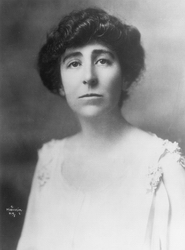
Jeannette Rankin of Montana was the first woman to be elected to the United States House of Representatives on November 7, 1916. During Rankin's first term in Congress (1917–1919), many women throughout the country did not have the right to vote, though they did in her home state of Montana. The equivalent of US Congress in Britain is the Parliament. The first woman to be elected to Parliament was the Countess de Markievicz in December 1918. She was the first woman to be elected to the House of Commons, but she did not take her seat.
<--Countess de Markievicz
Daylight savings time was adopted in the United States on March 19, 1918 by a Congressinal act. The United States was behind the Europeans in this event. Germany started daylight savings time on April 30, 1916 to replace artificial lighting so they could save fuel for the war effort. It was quickly followed by Britain and many other countries. However, many countries reverted back to standard time post-World War I, and it wasn’t until the next World War that DST would make its return to many countries in order to save vital energy resources for the war.
First Woman in Congress
Jeannette Rankin of Montana was the first woman to be elected to the United States House of Representatives on November 7, 1916. During Rankin's first term in Congress (1917–1919), many women throughout the country did not have the right to vote, though they did in her home state of Montana. The equivalent of US Congress in Britain is the Parliament. The first woman to be elected to Parliament was the Countess de Markievicz in December 1918. She was the first woman to be elected to the House of Commons, but she did not take her seat.
Spotlight On
Trench Warfare
Trench warfare came about because powerful new weapons, like machine guns and accurate rifles, meaning that neither side could advance. Both sides built trenches. The trenches extended about four hundred miles and were about six and a half feet deep, including the sandbags placed around the tops. From the trenches, enemies launched attacks against each other but neither side could win a clear-cut victory. In the trenches, soldiers could not bathe or change clothes for days or weeks at a time. Human waste and unburied corpses attracted flies and rats. The soldiers became infested with lice and caught diseases and illnesses like trench foot. The bottoms of the trenches were often full of mud.
Art
War by Otto Dix
This painting is important this time period because it probes the tormented memory of endless days in the muddy trenches and dugouts, living with lice and rats and the constant danger of all-out attack, snipers, and exploding shells. Many who had escaped death or dismemberment were mentally wounded forever by their experiences like Dix. I think that although this painting is pretty gruesome and horrific, it helps show what the soldiers faced in trench warfare. It is kind of creepy that death is watching over the painting and because of all the destruction.

Artillery Preparation by André Dunoyer de Segonzac
This is an example of a sketch drawn at the front. Segonzac (1884-1974) belonged to the group of camouflage artists and so worked on the front line. His sketchbook contains numerous on-the-spot drawings, which he often went back to and completed on his return behind the lines, and annotated in the manner of an autobiographical diary. I thought that this drawing was really interesting because it was drawn on the front lines of battle and depicts what really happened so it is not just an interpretation.

Gassed and Wounded by Eric Kennington
Kennington took his subjects from the daily life of the British troops, with always the same desire for truth, be it as painful as that revealed by this painting. This is a tightly-knit work, there is a sharp contrast between light and dark, and the postures of the bodies piled up in a narrow space are disturbing. I thought that this painting was both interesting and frightening because it shows just how bad things were for the soldiers in the war. It shows how badly they were wounded and that it happened to many of them.
This painting is important this time period because it probes the tormented memory of endless days in the muddy trenches and dugouts, living with lice and rats and the constant danger of all-out attack, snipers, and exploding shells. Many who had escaped death or dismemberment were mentally wounded forever by their experiences like Dix. I think that although this painting is pretty gruesome and horrific, it helps show what the soldiers faced in trench warfare. It is kind of creepy that death is watching over the painting and because of all the destruction.
Artillery Preparation by André Dunoyer de Segonzac
This is an example of a sketch drawn at the front. Segonzac (1884-1974) belonged to the group of camouflage artists and so worked on the front line. His sketchbook contains numerous on-the-spot drawings, which he often went back to and completed on his return behind the lines, and annotated in the manner of an autobiographical diary. I thought that this drawing was really interesting because it was drawn on the front lines of battle and depicts what really happened so it is not just an interpretation.
Gassed and Wounded by Eric Kennington
Kennington took his subjects from the daily life of the British troops, with always the same desire for truth, be it as painful as that revealed by this painting. This is a tightly-knit work, there is a sharp contrast between light and dark, and the postures of the bodies piled up in a narrow space are disturbing. I thought that this painting was both interesting and frightening because it shows just how bad things were for the soldiers in the war. It shows how badly they were wounded and that it happened to many of them.
Important People
Woodrow Wilson
United States President Woodrow Wilson was born on December 28, 1856 in Staunton, Virginia. He entered politics in 1910 when he was persuaded to run for governor of New Jersey. After only two years as governor, he beat out Teddy Roosevelt and William H. Taft in the presidential election of 1912. Although he first championed isolationism, he became a strong advocate for U.S. involvement in World War I. He was one of the Big Four at the Congress of Versailles and wrote the Fourteen Points which were an outline of proposals for a post – World War I peace settlement. He pushed for the U.S. to join the League of Nations but was overridden by Congress. He died on February 3,1924.
Archduke Franz Ferdinand
United States President Woodrow Wilson was born on December 28, 1856 in Staunton, Virginia. He entered politics in 1910 when he was persuaded to run for governor of New Jersey. After only two years as governor, he beat out Teddy Roosevelt and William H. Taft in the presidential election of 1912. Although he first championed isolationism, he became a strong advocate for U.S. involvement in World War I. He was one of the Big Four at the Congress of Versailles and wrote the Fourteen Points which were an outline of proposals for a post – World War I peace settlement. He pushed for the U.S. to join the League of Nations but was overridden by Congress. He died on February 3,1924.
Archduke Franz Ferdinand
Archduke Franz Ferdinand was born in 1863. The nephew of the Hapsburg emperor Franz Josef, Ferdinand was first in line to the Austro-Hungarian throne when he visited Sarajevo in June of 1914. He and his wife Sophie were shot to death as they rode through the city in a motorcade on June 28; the assassin was Gavrilo Princip, a member of the Serbian nationalist group known as the Black Hand. His assassination ultimately led to the outbreak of World War I.
Arthur Zimmermann
Arthur Zimmermann was born on October 5, 1864. Zimmermann was a career diplomat who had been in service to his native Germany since 1896. By the beginning of World War I, Zimmermann was the undersecretary of state for foreign affairs, and in 1916 he was named foreign minister. On January 16, 1917 he sent a telegram to the German ambassador to Mexico, suggesting a Germany-Mexico alliance against the United States and promising German support for the Mexican recapture of territory in Texas, Arizona and New Mexico. The British intercepted the coded message and deciphered it, finally revealing it to the United States. When the telegram was made public, President Woodrow Wilson had little choice but to declare war on Germany, and the U.S. entered the war. He died on June 6, 1940.
Introduction
Chapter 27: The Great Break: War and Revolution is about World War I. The First World War was long, indecisive, and tremendously destructive. It was called the Great War because of its unprecedented scope and intensity. The war had a grear impact on all aspects of life and development of Europe and the world. It was called "the war to end all wars," but unfortunately this was not the case. The purpose of this blog is to better understand how World War I happened and how it effected and changed Europe and the world.
EQ: What caused the Great War?
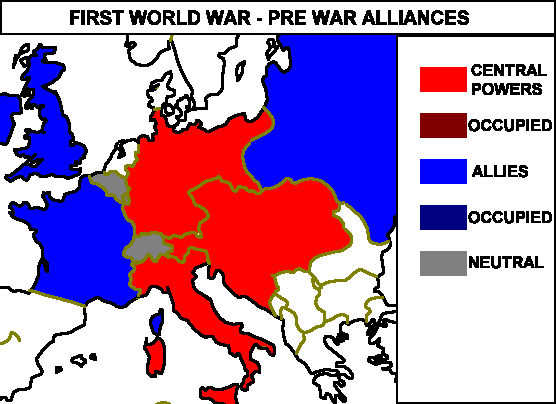
The main causes of World War I were militarism like new weapons and the Schlieffen Plan; alliances like the Triple Alliance and the Triple Entente; imperialism like the Berlin-Baghdad Railroad and the 1st and 2nd Moroccan Crisis; and nationalism like the First Balkan Crisis and the 1st and 2nd Balkan Wars. The war also sparked because of the assassination of Archduke Franz Ferdinand.
EQ: What caused the Great War?
The main causes of World War I were militarism like new weapons and the Schlieffen Plan; alliances like the Triple Alliance and the Triple Entente; imperialism like the Berlin-Baghdad Railroad and the 1st and 2nd Moroccan Crisis; and nationalism like the First Balkan Crisis and the 1st and 2nd Balkan Wars. The war also sparked because of the assassination of Archduke Franz Ferdinand.
Subscribe to:
Comments (Atom)